Cornwall: A Script Font That Balances Elegance and Practicality
Understanding the Visual Personality of Cornwall
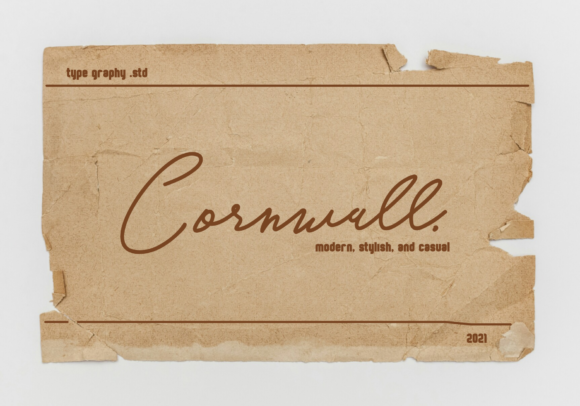
When you first encounter the Cornwall typeface, you notice something distinct. It’s not just another script font attempting to mimic raw handwriting. Instead, Cornwall presents a polished, vintage-inspired aesthetic defined by smooth, consistent curves. It sits in a unique space between casual handwritten fonts and rigid formal scripts. For designers and brand owners, this balance is crucial. It suggests heritage and elegance without feeling stuffy or outdated. The letterforms connect fluidly, creating a sense of rhythm that guides the eye naturally across the page. This isn't a font that demands attention through loud, jagged strokes; it earns attention through quiet confidence and refined structure.
The "vintage styled" label often associated with Cornwall refers to its classic proportions and the way its strokes flow. It avoids the overly geometric trends of modern typography in favor of softer, more organic shapes. This gives your text a tactile quality, almost as if it were penned by a skilled calligrapher using a broad-nibbed pen. However, because it is a carefully crafted digital asset, it maintains a level of consistency that real handwriting cannot always achieve. This consistency is what makes it a reliable tool for professional design work, ensuring that your brand identity remains stable across different mediums.
Where Cornwall Shines: Practical Applications
The true test of a creative font is how well it adapts to real-world scenarios. Cornwall excels in environments where you need to convey personality and approachability. In logo design, for instance, it creates an immediate emotional connection. It is particularly effective for boutique businesses, lifestyle brands, wedding planners, and artisanal product lines. The font suggests that the brand cares about details and quality.
Consider packaging design. If you are selling high-end cosmetics, specialty coffee, or handmade goods, the label needs to look premium. Using Cornwall on your packaging can elevate a standard product to something that feels like a luxury item. The smooth curves read well at medium sizes, making it ideal for the front of a box or a bottle label. It pairs exceptionally well with a clean sans serif font for the product descriptions, creating a visual hierarchy that is both functional and beautiful.
Beyond physical products, Cornwall is a strong contender for editorial design and web design. While you wouldn't use a script font for body text, it is perfect for pull quotes, chapter titles, or blog headers. It breaks up the monotony of standard text blocks and adds visual interest to your layout. For social media managers, this premium font is a valuable asset. It helps create cohesive social media graphics that stand out in a crowded feed. Whether you are designing an Instagram story, a Pinterest pin, or a Facebook banner, Cornwall adds that necessary touch of sophistication.
Strategic Typography: Using Cornwall for Brand Identity
Choosing a typeface is a strategic decision that impacts how your audience perceives your brand. Fonts communicate values before the reader even processes the words. Cornwall communicates tradition, care, and creativity. When you use this script font consistently, you build a specific brand voice. It tells your audience that you value aesthetics and that you operate with a level of professionalism.
However, relying on a single font can sometimes limit your design flexibility. This is where font pairing becomes essential. Cornwall is a display font, meaning it is designed for impact rather than readability in long paragraphs. To create a balanced design system, you should pair it with a highly legible serif font or a modern sans serif font. For example, using Cornwall for your main headings and a font like Montserrat or Garamond for your subheadings and body text creates a perfect contrast. The script font draws the eye in, and the secondary font delivers the information clearly.
It is also worth reviewing the specific styles included with the Cornwall font family. Many premium typefaces include alternate characters, ligatures, or swashes. These features allow you to customize the look of specific words, ensuring they don't look repetitive. If you are designing a logo, utilizing these alternates can make your wordmark truly unique. Always test these features in your specific design software to ensure they render correctly.
Evaluating Fit and Readability
Before committing Cornwall to a large-scale project, you must evaluate its fit and performance. Readability is subjective and depends heavily on context. While Cornwall is defined by smooth curves, it is still a connected script. This means that at very small sizes, such as mobile captions or fine print, the letters might merge together, making it difficult to read. As a rule of thumb, reserve this typeface for medium to large text sizes.
Test the font against your specific color palette and background imagery. A busy background photo might clash with the intricate details of the script. In such cases, you may need to add a semi-transparent overlay or a solid shape behind the text to ensure legibility. Furthermore, consider the spacing. Script fonts often benefit from slightly increased tracking (letter spacing) to prevent crowding, although you must be careful not to disconnect the letters too much, as that disrupts the flow of the script.
Commercial Considerations and Final Thoughts
For entrepreneurs and small business owners, understanding the licensing of design assets is non-negotiable. Cornwall is a commercial font, which means it requires a license for use in commercial projects. This is a standard practice in the industry that supports the type designers who craft these tools. Ensure you purchase the correct license based on your needs—whether that is for a single user, a team, or for embedding in an app or software.
In summary, Cornwall is more than just a decorative typeface. It is a versatile tool for modern typography. It brings a vintage charm to contemporary projects, making it suitable for a wide range of applications from web design to physical goods. By understanding its personality, pairing it wisely, and respecting its readability limits, you can use Cornwall to significantly enhance your visual communication. It offers a way to add a human touch to digital projects, bridging the gap between cold technology and warm, personal branding. If you are looking to refresh your brand’s look or add a sophisticated flair to your next project, Cornwall is a choice that delivers professional, timeless results.