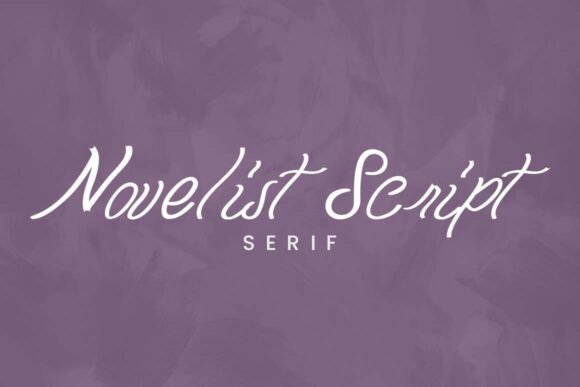
Novelist: The Premium Handwritten Script for Elegant Design
In a world saturated with crisp, digital precision, there’s a growing hunger for the human touch. We crave authenticity, the slight imperfections that signal something was made with care, not just calculated by a machine. This is the space where Novelist lives. It’s not just another script font; it’s a carefully crafted digital penmanship that brings a palpable sense of warmth, elegance, and personal connection to any project. Think of it as the typographic equivalent of a handwritten note from a trusted friend or the signature on a bespoke garment—effortless, sophisticated, and unmistakably personal.
More Than Just Letters: The Anatomy of Effortless Luxury
What sets Novelist apart in the crowded marketplace of premium fonts? The difference lies in its thoughtful design. This isn’t a hurried, casual scrawl. Each character is drawn with the fluid movement and organic flow of high-end custom penmanship. The connections between letters are handled with refined ligatures, meaning the transitions feel natural and intentional, avoiding the awkward, mechanical joins that plague many script fonts. The overall rhythm is sophisticated and unhurried, giving text a graceful, human cadence.
The personality of Novelist is one of quiet confidence. It doesn’t scream for attention with wild flourishes; instead, it commands it through its inherent elegance and readability. It’s a display font that understands its role—to add personality and hierarchy without sacrificing clarity. The strokes have a balanced weight, making it surprisingly versatile for both large headlines and smaller, impactful text blocks where that personal touch is needed. It’s a typeface that feels both timeless and thoroughly modern, capable of elevating a design from good to genuinely memorable.
Where Novelist Truly Shines: Practical Applications
Understanding a font’s character is one thing; knowing where to deploy it is another. Novelist excels in projects where emotion, authenticity, and a premium feel are paramount. Its strength lies in its ability to make a brand or an event feel intimately curated.
- Wedding & Event Stationery: This is Novelist’s natural habitat. Imagine it gracing elegant “Save the Date” cards, flowing across romantic RSVP sheets, or adorning place cards at a reception. Its personal, handwritten style infuses stationery with the intimacy and romance the occasion deserves, making every guest feel specially considered.
- Luxury & Boutique Branding: For brands in fashion, jewelry, cosmetics, or artisanal goods, Novelist is a powerful asset. Use it for signature logos, packaging labels, or hang tags. It instantly communicates a story of craftsmanship, exclusivity, and personal attention to detail. A skincare brand using Novelist on its labels tells a story of care and premium ingredients before the customer even opens the jar.
- Photography & Art Watermarks: Photographers and artists can use Novelist to create a professional, custom-signed watermark that doesn’t detract from the work itself. It’s far more sophisticated than a standard digital signature, adding a layer of perceived value and ownership that aligns with a high-end portfolio.
- Digital Presence & Social Media: In the fast-paced world of social media, standing out is key. Novelist is perfect for creating chic quote graphics for Instagram, stylish Pinterest pins, or unique website headers and blog titles. It helps content creators and lifestyle bloggers establish a consistent, recognizable aesthetic that feels modern and personal.
Integrating Novelist into Your Design Workflow
Choosing a creative font like Novelist is just the first step. Using it effectively requires a bit of strategic thinking. As a designer or small business owner, your goal is to harness its personality without compromising the project’s overall function.
Pairing for Professional Balance
The most crucial tip for using a strong handwritten font is to pair it wisely. Novelist carries a lot of stylistic weight, so it needs a grounding partner. For most applications, this means pairing it with a clean, neutral sans serif font or a classic, understated serif font. Use Novelist for headlines, logos, or pull quotes—where you want maximum personality—and let the paired typeface handle the body copy. This creates a clear visual hierarchy, ensures readability for longer text, and gives the design a professional, balanced look. A pairing like Novelist with a simple sans serif like Montserrat or a serif like Lora often works beautifully.
Readability and Context are Key
While Novelist is designed with excellent legibility for a script, it’s still a display font. Avoid setting entire paragraphs in it. Its magic is lost, and readability plummets. Think of it as a seasoning, not the main ingredient. Test it at the intended size and in the context of your full layout. Does it still read clearly? Does the flow of the ligatures work with the specific words you’re using? Always prioritize clear communication over stylistic flair.
Licensing and File Formats
When you invest in a commercial font like Novelist, you’re not just buying letters; you’re buying a license to use them. Ensure you understand the license terms, especially if you’re using it for client work, merchandise, or large-scale distribution. Most premium font licenses are clear and fair, but it’s due diligence every marketer and designer should perform. Check what’s included: are there multiple weights or styles? Does it include OpenType features like alternate characters or additional ligatures? Exploring these extras can unlock even more unique customization for your brand identity or project.
Evaluating the Project Fit
Ask yourself: does the personality of Novelist align with the message and audience? It’s perfect for a wedding invitation, a boutique’s lookbook, or a lifestyle blog. It might be less suitable for a corporate financial report or a technical manual. The goal of choosing any typeface is to find one that enhances the content’s meaning, not one that competes with it. Novelist is a specialist tool for specific, powerful applications. When used in the right context, it doesn’t just present information—it creates an experience, transforming empty space into a canvas of elegant, personal expression.